
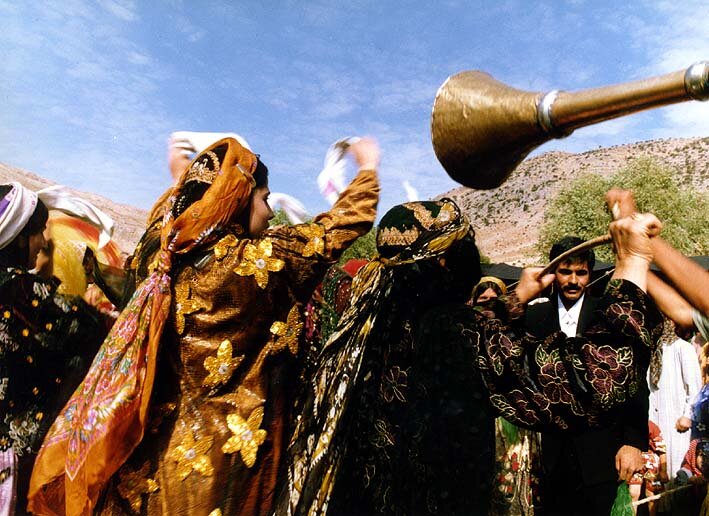
Tehran – Tehran’s Milad Tower will host a festival dedicated to attractions in the western provinces of Iran, which is considered completely unknown to many cultural enthusiasts.
“The main elements of the event are the installation of booths and nomadic sheachadors (black tents) to showcase tourist attractions, the presentation and sale of handicrafts, the performance of music and ceremonies, and the provision of indigenous souvenirs and dishes.” Said Deputy Tourism Minister Arias Garshal Buffian. On Friday.
Despite the vibrant natural landscape, countless historic sites, and above all, kind people, the province of West Iran is still less knowledgeable than the rest of the ancient land, according to experts. Not done.
According to Shalbafian, the vast majority of domestic travelers have never heard of the names of various cities in western Iran. “actually, [regarding tourism] Those destinations are not properly featured or advertised. “
“Our goal is to define new tourism routes that emphasize the provinces of western Iran, diversify tourist destinations and harness their capabilities.”
Over the past few years, the western states of Iran have held several meetings to discuss ways to expand tourism, with local government officials, hotel owners and travelers in the provinces of Lorestan, Iran, Chahar Mahal-Bactiari, Kohirye and Boyer. We gathered agencies and tour operators. Among them, Ahmad, Kermanshah, Cordestan, Hamedan, Zanjan, East Azalbaijan.
One of the potentially important destinations in the West Wing is the cultural landscape of Uramanat, which was listed as a UNESCO World Heritage Site last year.
Spreading on the slopes of Sarvabad County in the heart of the Zagros Mountains, the scenic landscape shared between the states of Cordestan and Kermanshah in western Iran is hundreds of villages, 106,000 hectares of land and 303,000 hectares. Includes land around.
Just as the roof of each house forms the garden of the upper house, it boasts a dense staircase of houses, further enhancing its charm and charm.
Archaeological discoveries dating back about 40,000 years, caves and ledges, ancient paths and paths along valleys, motifs and inscriptions, cemeteries, burial mounds, castles, settlements and other historical evidence from the Paleolithic era. Proving the continuity of life in the Uramanat area until this time.
According to UN agencies, Uramanat is an exceptional testimony to the cultural traditions of the lifestyle of the Hawarami semi-nomadic herders, a Kurdish tribe who have lived in the Zagros Mountains for thousands of years. This outstanding cultural tradition includes ancestral transhuman practice, seasonal lifestyles in Havar, steep tiered agriculture, soil and water management, steep tiered village planning and construction. It is reflected in the traditional knowledge of and the rich variety of intangible heritage. It reflects a harmonious coexistence with nature.
Islamic republic expects great success from numerous attractions such as bazaars, museums, mosques, bridges, baths, madrasas, mausoleums, churches, towers and mansions. Twenty-six of them are on the UNESCO World Heritage List.
The festival, which will be held at the foot of the Mirad Tower from July 24th to 28th, will be attended by exhibitors, tour operators, artists and craftsmen from the states of Hamedan, Iram, Kermanshah and Lorestan.
AFM
..
Comments
Post a Comment